Haskap in the garden
How to prune haskap in Québec
A simple guide to choosing which branches to remove while preserving healthy growth and future fruit.
The short answer
A healthy haskap shrub usually needs little pruning. Start with dead or damaged wood. On an established shrub that has become crowded, remove a few troublesome or ageing branches near their base while keeping vigorous young growth. Step back and look again before cutting more.
These suggestions are mainly for home gardeners. A producing orchard may use a different training method to meet its harvest goals.
When should you prune in Québec?
Plan the main pruning during dormancy: after leaf fall in autumn, or in late winter to very early spring before buds open. Haskap starts growing early, so watch the buds rather than relying on a fixed calendar date. Dead, broken or damaged wood can be removed when you notice it.
Choose the timing according to your local climate and the shrub’s condition. Assess its vigour before making major cuts.
Young, mature or old: what changes?
Young shrub
Inspect it each year, but give its roots and structure time to develop. Remove mainly dead, broken or seriously troublesome wood. Light correction can help; avoid shortening every branch to impose a shape.
Mature shrub
If light and air already move through it, a few cuts may be enough, or none may be needed. Where branches cross, rub or crowd the centre, select only those whose removal will make a real difference.
Older shrub with declining vigour
Look for older stems with little new growth that block younger branches. Removing them gradually can renew the structure. Cutting a genuinely old, unproductive shrub very low is a separate, much stronger option that should follow an assessment of its condition.
A simple five-step method
- Look at the whole shrub. Find dead wood, branches on the ground and areas that are truly crowded.
- Remove dead or broken wood. Start with the clearest cuts.
- Choose a few troublesome branches. A stem lying on the soil or two rubbing together may be candidates; a branch that merely leans may remain.
- Thin gently. On a dense shrub, remove a few older stems near their base instead of shortening every tip. You do not need to empty the centre.
- Stop and reassess. If fruit will be easier to reach and vigorous young growth remains, that may be enough for this year.
For routine maintenance, a restrained approach matters more than perfect symmetry. Heavy pruning can also remove wood that would have carried flowers and fruit.
QUÉBEC DEMONSTRATIONS
Watch pruning at different shrub ages
These MAPAQ demonstrations are in French. Choose the age closest to your shrub, then adapt the cuts to its condition and natural shape.
Select an age group to load one video.
BEFORE YOU CUT
Five things to look for on your shrub
Use these sketches to inspect the whole shrub first. “Assess” does not mean “cut every branch like this.”
Dead or broken
Start with wood that is clearly dead, broken or badly damaged.
Lying on the soil
Consider a low stem if it touches the ground or blocks care and harvest.
Branches rubbing
Choose one branch only when two stems truly rub or obstruct each other.
Crowded older wood
On a mature dense shrub, consider removing a few weak old stems near their base.
Vigorous young growth
Keep healthy young stems that have space and can renew the shrub.
1. Before the cut
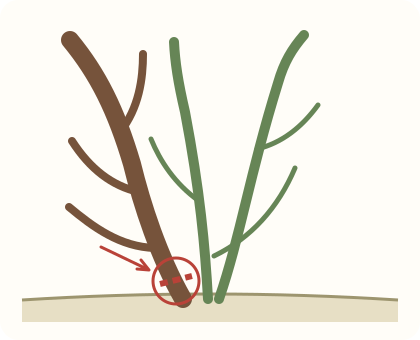
Identify the older stem to remove and protect the younger stems.
2. After the cut
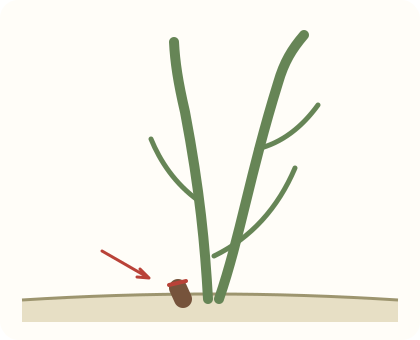
Keep the younger stems; avoid leaving a long stub.
How can you renew an older haskap shrub?
Before blaming the shrub’s age for a smaller harvest: check whether compatible varieties bloomed together, whether insects could visit the flowers, and whether sun, water, drainage, birds or damaged stems explain the loss. A small harvest alone is not a reason for severe pruning. Review the pollination guidance.
If the shrub is genuinely old and less vigorous, removing some old stems over several seasons is often a cautious first approach for a home gardener. The University of Saskatchewan also notes that a genuinely old, unproductive shrub can be cut back very low and allowed to regrow. That is a much stronger intervention than routine pruning, and normal fruit production will take time to return.
If you are unsure about the shrub’s age, health or cultivar, start lightly and assess it again the following season.
Should every cultivar be pruned the same way?
No. Natural form and density vary by cultivar and growing conditions. The University of Saskatchewan describes Aurora as upright and spreading; it stayed relatively open in one observation trial. That does not mean every Aurora shrub will always need little pruning.
With Indigo Gem, Boreal Beast or any other cultivar, begin with the actual branches in front of you. Remove growth that truly interferes with light, care or harvest instead of forcing all cultivars into one shape.
Before your first cut
Choose a dormant period for the main pruning, start with damaged wood and remove only branches that cause a clear problem. Keep vigorous young growth. Your shrub’s age, cultivar and garden conditions will shape the result.
Next, check how your shrubs are pollinated and learn when their berries are ready to pick.