Haskap variety 2 of 11
Indigo Gem
Get to know this variety and where it fits in the usual ripening order at Camerise St-Gabriel.
Usual ripening order at our orchard: 2 of 11
Five quick facts
- Usual period
- Early season
- Flavour
- Well-rated flavour in published trials
- Texture
- Pleasant after freezing
- Best use
- Freezing and eating chilled
- Picking
- Low shrub; convenient for children
Its flavour was particularly well rated in NDSU’s 2011–2012 trials.
That finding comes from a North Dakota trial, not a ranking of fruit from our orchard.
It follows Blue Banana in our usual order. If a tasting is offered, compare its flavour with the other ripe berries available at that time.
GROWN AND OBSERVED HERE
What we observe at Camerise St-Gabriel
These practical notes come from our own plants, harvests and visitor experience. They can vary with ripeness, weather and the season.
- Compared with Blue Banana, its berries are rounder. In our rows, Indigo Gem is one of the more productive varieties.
- Customers have told us they especially enjoy eating the berries straight from the freezer, like small frozen treats on hot days.
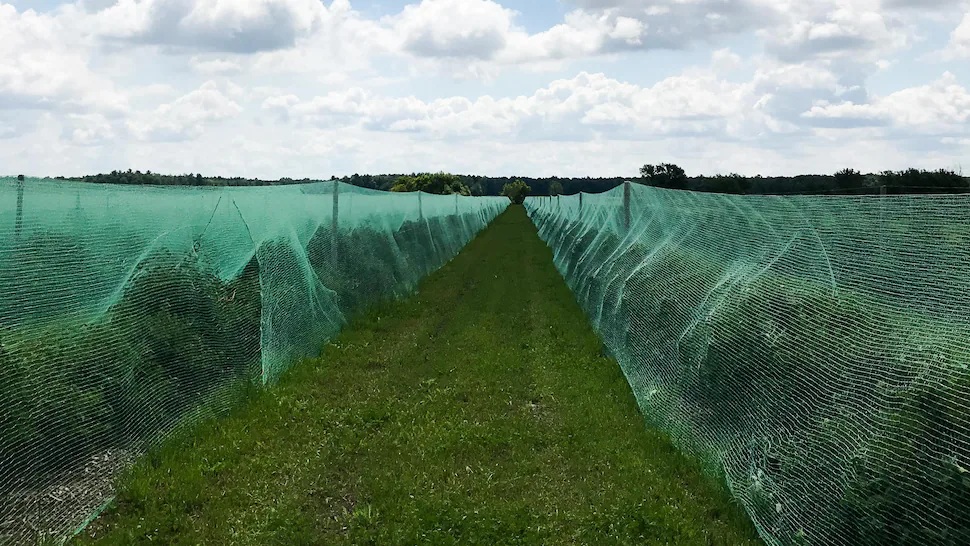
- Its branches tend to spread sideways and the plant stays fairly low. Children can reach it easily; for adults, a small stool makes picking the lower berries more comfortable.
Published descriptions and background
Origin and identity
Indigo Gem comes from the University of Saskatchewan breeding program. Its former selection number is 9-15, and it belongs to the original Indigo series.
Taste and texture
Descriptions of the Indigo series point to a sweet-tart taste and a slightly chewier bite. It is one to explore if you enjoy a lively haskap flavour rather than a simply mild berry.
Fruit and picking
Early breeding notes reported smaller berries than those of several more recent varieties. Our orchard places it second in the ripening order. Performance after rain and during transport still needs to be measured here.
Fresh or prepared
A more tart flavour can be enjoyable fresh and interesting in sweet preparations. This is a serving idea based on taste preference, not a scientific ranking of the best cultivars for processing.
What we will continue to observe here
To document at our orchard: how tartness changes through full ripeness, firmness after picking, and visitors’ reactions when comparing it with Aurora.
The ripening order comes from our orchard observations. Varieties may overlap, and weather changes timing, flavour and berry size. Published measurements come from other growing sites and do not indicate what can be picked today.
Sources and context
Published fruit descriptions come from the sources below; they are not measurements made at our orchard. The usual ripening position is our own observation.